As one of the sectors with the largest share of global energy consumption and carbon emissions, the construction industry stands at a critical point in the modern world's sustainability goals. At Truva İnşaat, we meticulously plan our projects not only for today's comfort but also to preserve the ecological balance of the future. Sustainable construction site management is a holistic approach that aims to minimize environmental impact and use resources as efficiently as possible throughout the process from a building's foundation to its delivery. In this article, we examine ways to reduce the carbon footprint in construction site processes and modern engineering solutions in a question-and-answer format.
Why is sustainable construction site management at the center of modern architecture?
While traditional construction methods are known for generating large amounts of waste and uncontrolled energy consumption, sustainable construction site management aims to break this cycle. Modern architecture is no longer concerned only with the aesthetics of the finished product, but also with the conditions under which it is produced and the environmental burden it creates. Managing environmental impacts throughout construction site processes increases the project's corporate value while also helping preserve the local ecosystem. This approach ensures that construction is perceived not merely as a production process, but as a transformation process in harmony with nature. In Truva İnşaat projects, sustainability is not a plan on paper, but a shared discipline among every worker and engineer on site.
How can energy efficiency be maximized on a construction site?
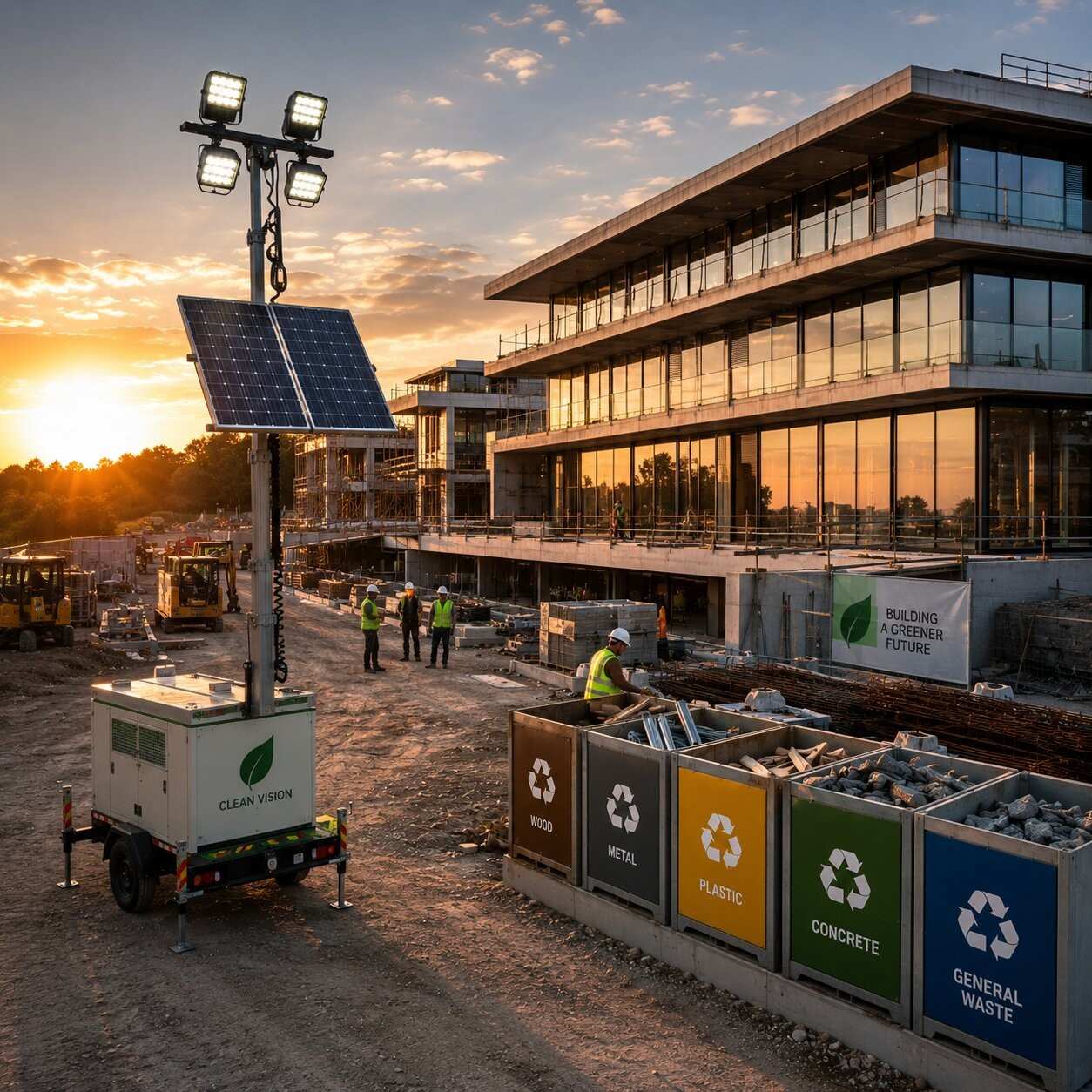
A construction site's energy consumption generally comes from temporary lighting, heavy machinery and the energy needs of site offices. To increase energy efficiency, the use of solar-powered lighting systems on construction sites and the transition to low-energy LED technologies are of great importance. In addition, optimizing the idling times of machinery and integrating energy management systems into the site directly reduces carbon emissions. High insulation standards used in temporary construction site structures reduce heating and cooling loads, providing energy savings. These seemingly small technical measures can make a significant difference to the overall energy balance of large-scale projects.
How do waste management and recycling affect the carbon footprint?
Uncontrolled disposal of construction site waste causes both environmental pollution and the loss of embodied energy. On a sustainable construction site, waste is separated at the source and incorporated into recycling processes. Recovering concrete, steel, wood and packaging waste back into the economy saves the energy required for producing new raw materials. Reusing soil excavated during earthworks in landscaping minimizes emissions caused by transportation. This discipline in waste management not only keeps the construction site clean but also radically reduces the project's ecological footprint.
Does the use of local materials reduce logistics-related emissions?
Transporting construction materials over long distances is one of the largest sources of carbon emissions in the logistics sector. Choosing local quarries, domestic concrete plants and suppliers in nearby areas shortens transportation processes. This not only reduces carbon emissions but also supports the local economy and improves the material's compatibility with the regional climate. At Truva İnşaat, while managing our supply chain, we calculate the carbon burden of distances and focus on choosing the nearest qualified sources. Local sourcing is one of the most genuine and effective ways to achieve sustainability.
How do water conservation and dust control contribute to environmental sustainability?
Water consumption in construction site processes is generally concentrated in concrete pouring, cleaning and dust prevention activities. Installing rainwater collection systems on construction sites and using this water for dust control reduces pressure on the mains water supply. In addition, biological treatment units allow water discharged from the construction site to be filtered before being released into nature, helping protect groundwater resources. Smart spraying methods used in dust suppression systems both conserve water and protect the air quality of nearby residents. Water management is one of the most vital components of a sustainable future, and construction sites should lead the way in this area.
How does digitalization and Building Information Modeling improve construction site efficiency?
Building Information Modeling, or BIM, technology allows us to identify errors during the construction process at the design stage, preventing material waste. Through digitalization, work processes on site can be monitored in real time, eliminating unnecessary material deliveries and repeated work. This technological infrastructure enables the construction site to progress in a much more organized manner with minimal waste. With the paperless construction site management principle, managing all projects through digital tablets both increases efficiency and eliminates paper consumption. Technology is one of sustainability's strongest allies and, when used correctly, delivers exceptional results in reducing the carbon footprint.
How do employee training and environmental awareness transform construction site culture?
The success of all technological and engineering solutions depends on the awareness of the people working on site. Sustainability training provided to construction site employees creates individual awareness in areas such as energy conservation and waste separation. A team that acts with environmental awareness prevents resource waste by reducing faulty workmanship. This cultural change ensures that the construction site is seen not merely as a workplace, but as an area for environmental protection. As the Truva İnşaat family, having every one of our employees share this ecological vision is the greatest factor in the sustainability success of our projects.
Protecting nature and leaving a livable world for future generations is the construction industry's greatest responsibility. Every sustainable step we take in construction site management is not only a project's success but also a contribution to the future of our planet. We continue to combine engineering discipline with environmental awareness and further reduce our carbon footprint every day. Remaining in harmony with nature while building the future is Truva İnşaat's unwavering principle.

 Notification Center 00:00